
We take a look at India's major imports and exports with Japan in recent years.

The government had in October 2007 set a sale price of $4.20 per million British thermal unit based on the price discovered by RIL from key customers.

Indian Oil Corp is unlikely to bid for a share in six new pipelines being built by Reliance Industries to transport fuel from its refinery to its planned chain of petrol stations.\n\n\n\n
India's crude oil imports jumped by over 29 per cent to 8.3 million tonnes in January this year despite import of petroleum products rising by 22.6 per cent to 660,900 tonnes.

Corporate revenues will decline for a third consecutive quarter in March on a YoY basis - one of the worst shows by these companies in many years.

He was speaking on the sidelines of a function to inaugurate the new building to house the Environment Ministry.
The Rs 5,700-crore Essar Group has recommenced the 12 million tonne mega refinery project in Gujarat, stalled since 1999, after tying up with financial institutions.
India's crude oil imports have jumped 5.3 per cent to 51.928 million tonnes in the first seven months of the current fiscal as against 49.289 million tonnes in the same period last fiscal.

High interest costs and a weak rupee may raise overall debt, even as refinancing may not be an issue.

CAG had in its previous reports slammed Oil Ministry and its technical arm DGH for not exercising enough control and vigil over KG-D6 block.
Reliance Industries Ltd plans to invest over Rs 4,500 crore (Rs 45 billion) in laying 5,895 km of product pipelines across the country as a precursor to begin the retailing of petrol and diesel.

There are several welcome standalone reforms, but these do not add up to a coherent strategy to achieve a $5 trillion economy or secure Aatmanirbharta, observes Rathin Roy.

The 2016 upstart, called Jio, dislodged rivals and has emerged as the nation's No. 4 carrier by offering call services free for life and data transmission at dirt cheap rates.

'If Indians are as smart as their counterparts in university, and have equal opportunity, then what is the reason that we cannot produce inventions of quality that are recognised by the world?'
.jpg)
Companies such as Indian Oil Corporation, Tata Steel Ltd and Tata Power Company Ltd will remain highly leveraged over the next 12 months because of weak industry dynamics and resulting constraints on cash flows, it said.

Automobile company Tata Motors, metals and mining major Vedanta, oil marketing firm Bharat Petroleum Corporation (BPCL), private sector IndusInd Bank, and two-wheeler major Bajaj Auto have witnessed their market cap slip below the Rs 1-trillion mark this year.

RIL had said at that time the allegations were baseless and devoid of any merit.

The Vedanta group on Wednesday confirmed putting in a preliminary expression of interest (EoI) for buying the government's stake in Bharat Petroleum Corp Ltd (BPCL).

Companies use journalists as conduits.

At present, in Myanmar, GAIL and IndianOil have a minority stake in a gas pipeline which goes to China, through South East Asia Gas Pipeline Company.

In a presentation prepared for the incoming Narendra Modi-government, the ministry listed national oil companies losing focus on domestic exploration as well as legal disputes around signed contracts with private explorers among the five things that went wrong during the United Progressive Alliance regime.

The commission asks for notification to be deferred; RIL's KG-D6 pricing issue may return to Cabinet

The national budget 2019-20 had an outlay of Rs 10,000 crore for Phase-II of the Faster Adoption and Manufacturing of Hybrid and Electric Vehicles scheme to boost electric mobility and increase the number of EVs in commercial fleets.

Following up on Finance Minister Arun Jaitley's Budget announcement of creating an integrated oil company, India's biggest oil and gas producer ONGC may buy all of the government's 51.11 per cent stake in Hindustan Petroleum Corporation Ltd.

Samajwadi Party on Tuesday attacked the Arvind Kejriwal-led Delhi government for registering FIRs against union ministers and industrialists, saying this was a "drama" staged by people like him to hide their inefficiency and attain "political martyrdom".

Quite a few large- and mid-cap stocks are yet to recover from the note ban, pharma, banking and rural demand-based industries among laggards.
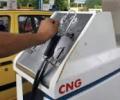
The Petroleum Ministry in an order on Wednesday said it has revised guidelines for allocation/supply of domestic natural gas to city gas distribution entities for CNG and piped cooking gas sector.

Relations between an elected government of Delhi and the LG can never be cordial: It is just the way the relationship is structured.

Delhi Police Crime Branch raided the office of a petrochemical co.
For India's upstream sector that has seen no new discovery coming into production.
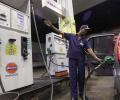
With the government reducing the net worth for new entities in fuel-marketing space to Rs 250 crore, the market is open for new players like Total, Adani, and Saudi Aramco -- and even supermarkets - to open fuel outlets.
Analysts said the higher capex by PSUs, along with government spending, could trigger a capex revival for the corporate sector by the second half of FY17
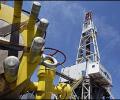
Oil Minister Dharmendra Pradhan had last month told the Parliament that his Ministry has disallowed RIL from recovering $2.376 billion invested to develop offshore Krishna Godavari gas fields as output has fallen drastically and was way below the promised volumes in past four years.

Making sense of the international crude market is incredibly hard.

The company is looking to invest more than $3 bn over the next three years.

To proceed with a Cabinet proposal to grant the relaxations to RIL, the Election Commission's approval will be sought.

On the last day of FY!5, the Sensex ended lower by 18.37 points at 27,957.49.
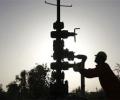
Reason behind for the change in his stance: gas price increase.
RIL might see its September quarter's profit between Rs 5,600 crore and Rs 5,670 crore.

Executives would analyse information and pass it to seniors.
